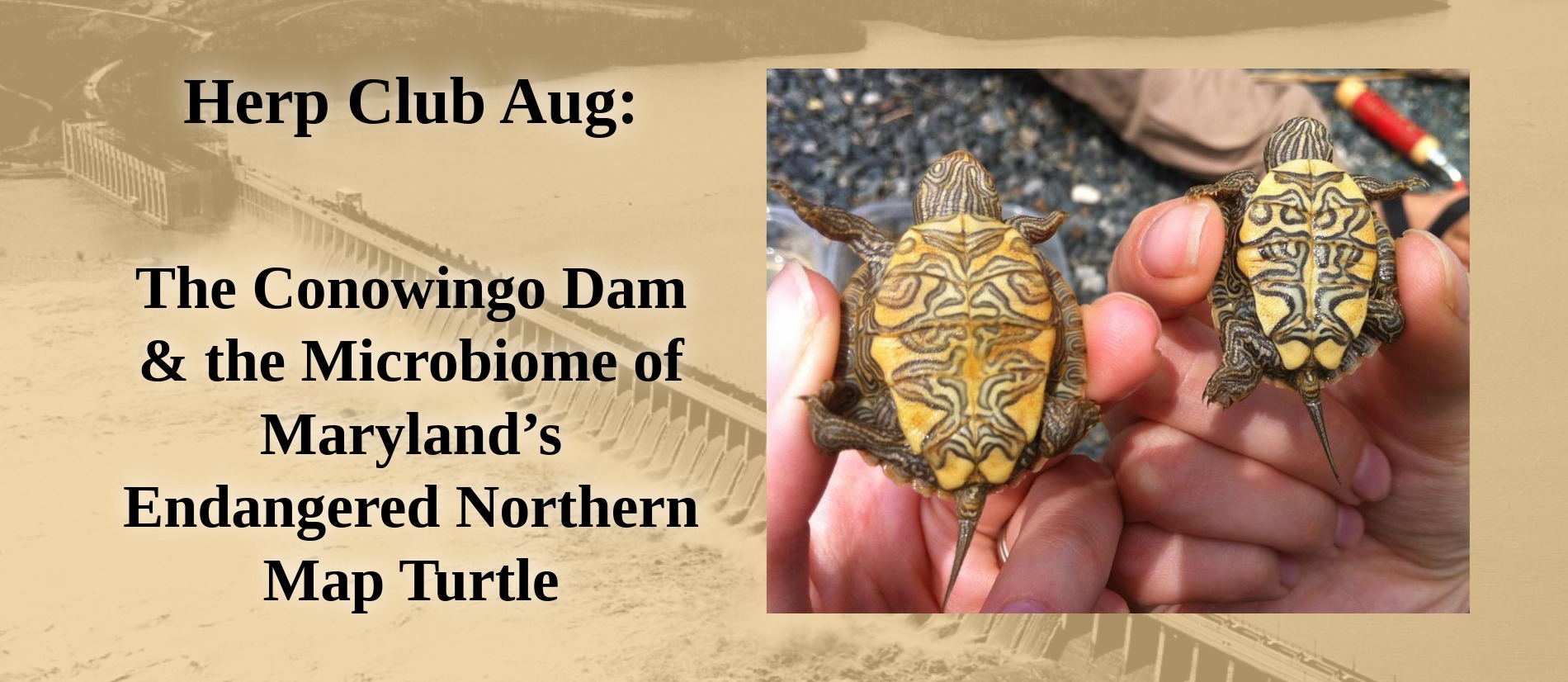
Northern Map Turtles (Graptemys geographica) are an endangered species in Maryland that faces significant habitat disturbances due to human activity and urbanization. One of the main factors contributing to habitat alteration of Northern Map Turtles in Maryland is the Conowingo Hydroelectric Dam, which bisects the population and contributes to its fragmentation. The combined effects that these anthropogenic stressors have on Map Turtle health is not known, but could be explored by studying the microbiome. Defined as the microorganisms living on and within a host, the microbiome has been studied as an indicator of organismal health and used to inform wildlife management. This presentation discusses the potential impact that the Conowingo Dam and other man-made stressors may have on Northern Map Turtles by exploring the microbiome. The work discussed here has the potential to impact future conservation efforts of Northern Map Turtles in Maryland.
In person attendance is preferred but this meeting will be hybrid in person and on zoom. If you wish to participate via Zoom, you need to register to receive the link.
Are you fascinated by reptiles and amphibians? The Natural History Society of Maryland’s Herp Club promotes the proper husbandry, conservation, study, and appreciation of reptiles and amphibians. Amateurs, professionals, and kids of all ages are welcome. Meetings are held on the second Wednesday of every month and are open to the public.
Although you don’t need to be a member to attend a meeting, membership gives you access to additional experiences. An annual NHSM membership is $35 for individuals, $50 for families; Herp Club membership is an additional $5 for individuals and $10 for families.
If you are not yet a member of NHSM, click here to join. When you join as a new member, you can add the club membership(s) of your choice to your registration. Current NHSM members who wish to join any clubs should email the Community Coordinator at rbaldwin@marylandnature.org.